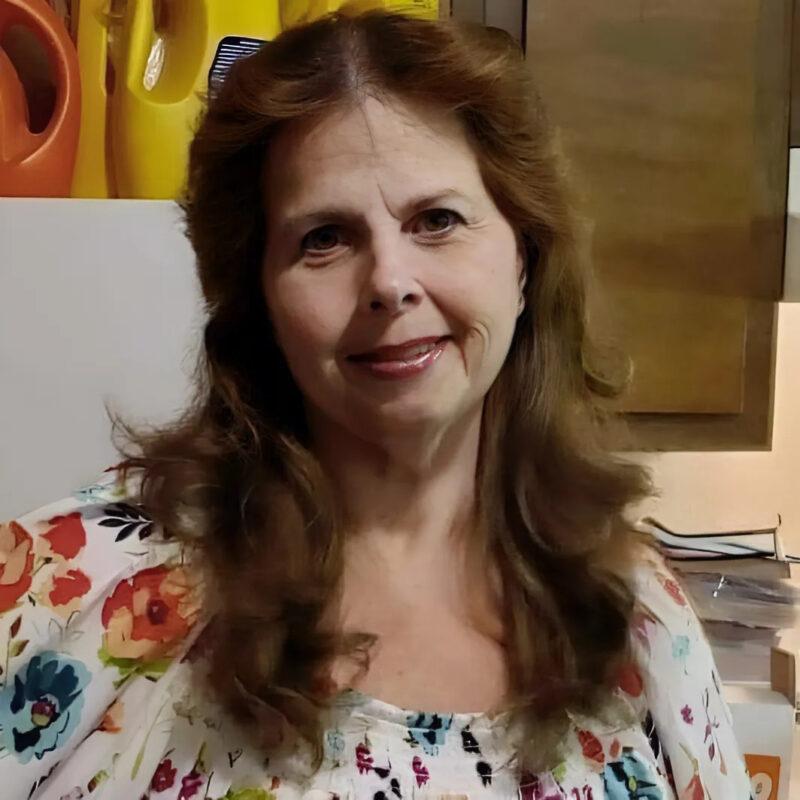
She once struggled to walk across a room, take a shower, or leave her home without assistance. At her heaviest, Pauline Potter weighed nearly 700 pounds, and her name became known around the world. But behind the shocking number was a woman desperately searching for help, fighting to regain her independence, and hoping for a future that seemed increasingly out of reach. Her remarkable transformation would eventually become one of the most memorable stories associated with the television series My 600-Lb. Life. Yet her final chapter, following years of extraordinary progress, was marked by unexpected tragedy.

The Woman Behind the World Record

When Pauline Potter first attracted international attention in 2011, headlines focused on one extraordinary fact: she had been recognized by Guinness World Records as the world’s heaviest living woman.
At the time, Pauline, who lived in Sacramento, California, weighed approximately 643 pounds, or 291.6 kilograms. A later Guinness record entry documented her at 647 pounds.
For many people, such an unusual world record might have seemed like a moment of fame. For Pauline, however, the recognition carried a much more complicated meaning.
She was not celebrating her weight.
She was searching for a way to change her life.
By the time she entered the record books, everyday activities had become exhausting challenges. Getting dressed, bathing, walking, and traveling outside her home required tremendous effort.
She had reached a point where the limitations imposed by her weight were affecting almost every aspect of her independence.
Pauline understood that her situation was serious. She also knew she could not continue living the same way indefinitely.
Rather than hide from public attention, she made an unusual decision. She contacted Guinness World Records because she believed that bringing attention to her circumstances might connect her with doctors, nutritionists, or other professionals who could help.
It was a decision that exposed her to judgment, criticism, and unwanted attention.
But it also introduced her story to millions of people.
And eventually, it helped open the door to a transformation that once seemed impossible.
Guinness World Records+1
A Childhood Where Food Was More Than Just Food
To understand Pauline’s struggles as an adult, it is important to look at the environment in which she grew up.
Pauline described coming from a family where many relatives struggled with their weight.
According to her account, her mother weighed more than 400 pounds, while her father weighed more than 600 pounds. She also said that most of her eight siblings were significantly overweight.
Food occupied an important place in family life.
It was part of celebrations, family gatherings, and ordinary daily routines. But it also served another purpose: emotional comfort.
When something good happened, food could become a reward.
When someone was upset, food could become a source of reassurance.
Over time, Pauline developed a relationship with eating that extended beyond physical hunger.
The habits she learned early in life followed her into adulthood, when they became increasingly difficult to change.
This does not mean that her weight can be explained by childhood experiences alone.
Severe obesity is a complex medical condition influenced by numerous factors, including genetics, appetite regulation, metabolism, environment, psychological well-being, medications, and access to appropriate healthcare.
Nevertheless, Pauline believed her upbringing played an important role in shaping her eating habits.
As she grew older, her weight continued increasing.
What began as a familiar part of family life gradually developed into a problem that would affect her health, mobility, relationships, and future.
The Slow Loss of Independence
One of the most difficult aspects of Pauline’s story was not simply how much she weighed.
It was how much of her ordinary life she gradually lost.
Many people rarely think about the physical movements involved in getting out of bed, walking to the bathroom, stepping into a shower, or sitting comfortably inside a car.
For Pauline, those movements became increasingly difficult.
As her weight approached 700 pounds, the strain on her body made even short distances exhausting.
Walking could leave her breathless.
Her knees hurt.
Standing for extended periods was uncomfortable, and completing basic personal-care routines required additional time and assistance.
She eventually relied on a mobility scooter to move around.
Driving became another major challenge. She could no longer comfortably fit into the driver’s seat of her vehicle, making her increasingly dependent on others for transportation.
The loss of mobility affected far more than her ability to travel.
It also limited her opportunities to socialize, shop, attend activities, and enjoy experiences that had once been part of normal life.
For someone who described herself as a sociable person, these restrictions were particularly difficult.
Pauline enjoyed spending time with friends, playing bingo, shopping, and scrapbooking.
She had interests, relationships, and dreams that extended far beyond the number displayed on a scale.
Yet her physical limitations increasingly determined what she could and could not do.
She wanted to be able to leave home without worrying about whether she could walk far enough.
She wanted to sit in the front seat of a car again.
She wanted to regain control over her daily routine.
Above all, she wanted more independence.
In a televised interview, Pauline explained that she recognized the serious physical strain her body was experiencing and wanted help before her health deteriorated further.
Her desire to change was becoming urgent.
Guinness World Records+1
Why Pauline Chose to Become a Guinness World Record Holder
In 2011, Pauline made the decision that would bring her story to international attention.
She contacted Guinness World Records.
At first glance, the decision seemed unusual.
Why would someone who desperately wanted to lose weight seek recognition for being the heaviest living woman?
The answer was surprisingly straightforward.
Pauline believed that public attention might help her find medical assistance.
She had already attempted to contact prominent television personalities and health experts, hoping that someone would listen to her situation.
When those efforts did not produce the assistance she wanted, she turned to Guinness World Records.
She understood that the title could be embarrassing.
She also understood that people might misunderstand her intentions.
But she was willing to accept that risk.
Her official recognition in September 2011 brought significant media coverage.
Photographs and interviews circulated widely, and her story appeared in news reports around the world.
Some people reacted with sympathy.
Others responded with criticism or disbelief.
Many focused entirely on her size without considering the circumstances behind it.
For Pauline, however, the publicity served a purpose.
She was finally being heard.
She was able to explain that her goal was not to remain the world’s heaviest living woman.
She wanted to become healthier, regain mobility, and perhaps one day be recognized for how much weight she had lost.
The record that made her famous was also something she hoped to leave behind.
Life at Nearly 700 Pounds
Although Guinness initially documented Pauline at 643 pounds, she later reported that her weight had risen to approximately 700 pounds.
At that level, the physical demands of everyday life were immense.
The human body is capable of remarkable adaptation, but carrying such an extraordinary amount of weight can place considerable strain on the cardiovascular system, respiratory function, joints, and other organs.
For Pauline, the consequences were already visible.
Her mobility had become severely restricted, and she experienced persistent discomfort.
She needed to think carefully about activities that other people completed without hesitation.
Even leaving the house could require planning and assistance.
There were also emotional challenges.
Living with severe mobility limitations can create feelings of isolation, frustration, embarrassment, and dependence.
Public attention added another layer of difficulty.
Once Pauline became internationally recognizable, strangers felt entitled to discuss her body, criticize her decisions, and speculate about her private life.
Yet she continued to speak publicly about her experiences.
She did not pretend that everything was easy.
She acknowledged her struggles with eating habits and the difficulties of changing behaviors that had developed over many years.
But she also remained hopeful that improvement was possible.
She was still a mother, a friend, and a woman who wanted to enjoy life.
And she had not given up on the possibility of a different future.
A New Opportunity Through My 600-Lb. Life
Pauline’s story entered another important chapter when she appeared on TLC’s reality television series My 600-Lb. Life in 2015.
The program followed individuals living with severe obesity as they pursued medical treatment and major lifestyle changes.
Participants worked with Houston-based bariatric surgeon Dr. Younan Nowzaradan, widely known as Dr. Now.
For Pauline, appearing on the show meant confronting the difficulties that had shaped her life for decades.
When her episode began, she weighed approximately 673.5 pounds.
Her mobility was extremely limited, and she faced significant challenges completing basic daily activities.
Her son Dillon was an important presence in her life, helping her manage tasks that had become difficult to perform independently.
The television program introduced viewers to the reality of her situation.
It also revealed how challenging the weight-loss process could be.
Treatment required far more than simply deciding to eat less.
It involved medical supervision, changes to longstanding habits, and the difficult process of rebuilding physical capacity.
Progress did not happen overnight.
Pauline experienced setbacks and moments of frustration.
Her relationship with Dr. Now was sometimes tense, particularly when her progress did not meet expectations.
Nevertheless, she continued her journey.
By the end of her original episode, she had lost approximately 149 pounds, bringing her weight to around 529 pounds.
For someone who had once struggled to move across a room, this represented a significant achievement.
But it was only one stage in a much longer process.
Yahoo+1
The Difficult Reality of Losing Hundreds of Pounds
Pauline’s experience demonstrated why substantial weight loss is rarely a simple or predictable journey.
People living with severe obesity may face numerous barriers to treatment.
Limited mobility can make physical activity difficult.
Pain may interfere with movement.
Longstanding eating habits can be difficult to change, particularly when food has served as an emotional coping mechanism for many years.
There may also be medical complications that require specialized care.
For Pauline, progress required a combination of medical treatment, dietary changes, and persistence.
She eventually underwent bariatric surgery as part of her weight-loss journey.
Such procedures can help patients lose substantial amounts of weight by changing the digestive system and influencing appetite and food intake.
However, surgery is not an effortless solution.
Patients generally require ongoing medical monitoring, nutritional support, and long-term lifestyle adjustments.
Even after significant weight loss, additional health concerns can remain.
Pauline’s journey was no exception.
She continued working toward improved mobility and greater independence after her first television appearance.
There were difficult periods, but she also made remarkable progress.
As the years passed, the woman who had once weighed nearly 700 pounds began approaching a weight that would have seemed unimaginable earlier in her life.
A Transformation That Captured Attention Again
By 2020, Pauline’s transformation had become extraordinary.
In social media updates, she reported weighing approximately 223 to 226 pounds.
Compared with the nearly 700 pounds she had reported at her heaviest, this represented a loss of roughly 475 pounds.
It was a dramatic change.
The transformation was not simply about a smaller number on the scale.
Losing that much weight could profoundly alter the practical possibilities of daily life.
Activities that had once required assistance could become easier.
Walking, moving around the home, and participating in social activities could become more manageable.
The physical demands placed on her body were substantially different from those she had experienced years earlier.
Pauline also underwent procedures to address excess skin following her major weight loss.
Excess skin is a common consequence of losing very large amounts of weight, particularly after years of significant stretching.
It can cause discomfort, skin irritation, difficulties with hygiene, and challenges with movement.
For some patients, reconstructive surgery becomes an important part of their recovery.
Pauline publicly shared photographs of her progress and expressed satisfaction with how far she had come.
Her transformation attracted renewed interest from people who remembered her earlier appearances.
Many viewers were surprised by the extent of her progress.
The same woman who had once entered the record books because of her extraordinary weight had now lost hundreds of pounds.
Her story had changed dramatically.
And for many people following her journey, that transformation represented the possibility of meaningful change even after years of serious difficulties.
HELLO!+1
More Than a Before-and-After Photograph
Pauline’s transformation was often presented through side-by-side photographs.
One image showed her at her heaviest.
Another showed her after losing hundreds of pounds.
The visual difference was striking.
But those photographs could never fully explain what she had experienced.
They could not show the countless decisions involved in changing her eating habits.
They could not capture the frustration of medical setbacks or the emotional challenges of living under public scrutiny.
They could not convey every moment of pain, uncertainty, or determination.
And they could not measure the importance of recovering aspects of independence that had once seemed lost.
A person’s health journey is not always reflected accurately by appearance alone.
For Pauline, weight loss was an important achievement, but it did not erase the challenges of her earlier life or guarantee that she would never experience serious medical problems again.
Her story was much more complicated than a simple transformation narrative.
It was the story of a woman who had spent years struggling with her health, sought help in an unconventional way, and eventually achieved an enormous physical change.
It was also the story of someone who continued facing difficulties even after reaching milestones that many people considered extraordinary.
The Unexpected Tragedy of 2025
After years of public attention surrounding her weight-loss journey, Pauline faced a devastating series of events in 2025.
According to her son, Dillon Brooks, Pauline was involved in a serious vehicle accident in January of that year.
He explained that they were traveling before sunrise when their vehicle struck a truck trailer that was stopped on the roadway.
The crash caused injuries to both of them.
Pauline suffered broken ribs and other injuries, including damage to her leg.
Although she survived the collision, the months that followed became increasingly difficult.
Her son later described a series of medical complications that significantly affected her health.
By the middle of the year, Pauline was experiencing serious digestive problems.
She struggled to keep food and liquids down.
This created additional concerns about her nutritional condition.
Further medical examinations revealed a blockage in her esophagus.
She also contracted COVID-19 and experienced other serious health problems during a prolonged period of hospitalization.
Doctors discovered a significant wound on her back, which added further complications to her treatment.
As her condition deteriorated, medical teams faced difficult decisions about which procedures she could safely undergo.
Her son reported that Pauline became malnourished and showed signs of heart and respiratory failure.
Despite efforts to treat her, her health continued to decline.
Eventually, the focus of her care shifted toward comfort.
She entered hospice care in November 2025.
It was a heartbreaking development for a woman who had spent so many years fighting to improve her health and regain control of her life.
People.com+1
Pauline Potter’s Death at Age 62
Pauline Potter died on November 27, 2025, which was Thanksgiving Day in the United States.
She was 62 years old.
Her son Dillon later announced her death publicly, sharing details of the difficult months that had followed their vehicle accident.
His account described a complicated medical decline involving injuries, digestive difficulties, infections, nutritional problems, and other serious health concerns.
An official cause of death was not publicly confirmed in the reporting available at the time.
The news saddened many people who had followed Pauline’s journey for more than a decade.
Some remembered her from the original Guinness World Records announcement.
Others knew her through My 600-Lb. Life.
Many had watched her transformation unfold over the years and admired the enormous progress she made.
Her death was particularly poignant because she had already accomplished something that once seemed almost impossible.
She had lost hundreds of pounds.
She had worked to improve her mobility.
She had experienced a dramatic change in her physical condition.
Yet her later medical struggles were a reminder that health is complex and that even extraordinary weight loss does not eliminate every risk a person may face.
Houston Chronicle+2
The Son Who Stood Beside Her
Throughout Pauline’s public journey, her son Dillon remained an important figure in her life.
When Pauline’s mobility was severely limited, she depended on help with everyday activities.
Dillon appeared in her television story and was familiar to viewers who followed her progress.
Their relationship became an important part of the narrative because it showed how severe medical conditions can affect entire families.
When one person experiences major physical limitations, relatives may take on responsibilities that are emotionally and physically demanding.
Caregiving can involve transportation, meal preparation, assistance with daily routines, medical appointments, and difficult conversations about treatment.
It can also create emotional strain for both the person receiving care and the person providing it.
Pauline’s journey illustrated some of those challenges.
Years later, Dillon was also the person who publicly explained the circumstances surrounding her final illness.
His announcement gave longtime followers a clearer understanding of the serious complications she had experienced.
Beyond the headlines and television episodes, Pauline was a mother whose life mattered deeply to her family.
That personal reality is an important part of how she should be remembered.
What Pauline’s Story Teaches Us About Severe Obesity
Pauline’s life offers an opportunity to consider the broader challenges faced by people living with severe obesity.
It is tempting to view extreme weight through a simple explanation involving eating habits or personal decisions.
But medical understanding of obesity is considerably more complex.
Body weight is influenced by biological, environmental, psychological, and social factors.
Genetic predisposition can affect appetite, energy regulation, and the body’s response to weight loss.
Hormonal changes may influence hunger and fullness.
Certain medications and medical conditions can contribute to weight gain.
Stress, disrupted sleep, emotional distress, and limited access to appropriate healthcare can also complicate treatment.
For individuals with severe obesity, mobility limitations may create additional obstacles.
Exercise can be painful or physically difficult.
Routine medical examinations may require specialized equipment.
Transportation can become a problem.
Patients may also experience stigma, which can discourage them from seeking care.
Pauline’s decision to contact Guinness World Records demonstrated how desperate she had become to find someone willing and able to help.
She believed public exposure might create an opportunity that private requests had not.
Her experience raises an important question: How many people facing serious health problems struggle to obtain the support they need before their conditions become severe?
Compassionate healthcare, individualized treatment, and long-term follow-up are essential.
Judgment alone does not solve medical problems.
And reducing someone to their weight can obscure the personal circumstances that deserve attention.
Why Her Transformation Was So Remarkable
A weight loss of more than 400 pounds is an enormous physical change.
To appreciate its scale, consider how profoundly such a reduction can alter the demands placed on the body.
At her heaviest, Pauline was carrying an extraordinary amount of weight during every movement.
Her joints, muscles, and cardiovascular system had to support that weight whenever she stood, walked, or changed position.
As her weight decreased, the mechanical demands of movement changed significantly.
But the process of losing weight at that scale also required substantial adaptation.
She had to confront habits that had developed over decades.
She needed medical assistance and ongoing treatment.
She faced setbacks, frustration, and the challenge of maintaining progress.
Her story was not one of effortless success.
It was a long process involving difficult decisions and considerable uncertainty.
That is part of what made her transformation so memorable.
She began her public journey at a point where ordinary movement had become extremely difficult.
Years later, she had achieved a weight reduction that transformed her appearance and physical circumstances.
The difference between those two stages of her life was extraordinary.
But perhaps the most meaningful achievement was that she continued seeking improvement despite the obstacles she faced.
The Problem With Judging Someone by a Number
When Pauline first entered the Guinness World Records, much of the public discussion centered on her weight.
The number was so unusual that it overshadowed almost everything else about her.
People wanted to know how she had reached that size.
They wondered what she ate.
They questioned how she lived.
Some reacted with curiosity, while others responded harshly.
Yet a person’s weight cannot explain their entire identity.
Pauline had relationships, interests, memories, hopes, and personal struggles that could not be measured in pounds.
She was a mother.
She enjoyed spending time with friends.
She wanted to participate in ordinary activities.
She wanted the freedom to move through the world more comfortably.
These desires were not extraordinary.
They were deeply human.
Her story illustrates how easily public fascination with an unusual physical condition can overshadow the individual experiencing it.
The same problem can occur when people celebrate dramatic weight loss without considering the emotional and medical challenges involved.
A person does not become worthy of dignity only after losing weight.
Pauline deserved respect at 700 pounds, at 500 pounds, and at 223 pounds.
Her humanity was never dependent on the number displayed on a scale.
A Legacy That Goes Beyond the Record Books
Pauline Potter will always be associated with one of the most unusual Guinness World Records.
Her name became internationally recognized because of her extraordinary weight.
But that record represents only one chapter of her life.
Her later transformation demonstrated how much her circumstances could change with treatment, persistence, and support.
Her television appearances also helped bring attention to the challenges of living with severe obesity.
Viewers saw that weight loss was not simply a matter of making one decision.
It could involve years of medical treatment, difficult adjustments, setbacks, and continued effort.
Pauline’s journey was not perfect.
She experienced frustration.
She faced criticism.
She sometimes disagreed with the way her experiences were portrayed on television.
But she also achieved remarkable progress.
Her life showed that meaningful change can occur even when someone has spent many years struggling with a serious condition.
At the same time, her final illness reminds us that no transformation guarantees a particular outcome.
Medical problems can arise unexpectedly, and a person’s health may remain vulnerable for reasons that are not visible to the public.
That complexity makes Pauline’s story more human, not less inspiring.
Remembering Pauline Potter: The Woman Who Wanted Her Life Back
When Pauline Potter contacted Guinness World Records in 2011, she was not searching for the kind of fame most people dream about.
She was searching for help.
At nearly 700 pounds, she had reached a point where basic activities were becoming increasingly difficult.
She wanted to walk more comfortably.
She wanted to travel without depending so heavily on others.
She wanted to regain the freedom to participate in everyday life.
And she wanted someone to recognize that she needed support.
The decision to make her situation public changed the course of her life.
It brought attention, criticism, television appearances, and eventually opportunities for medical treatment.
Over the following years, she lost hundreds of pounds and achieved a transformation that surprised many of the people who had followed her story.
Her journey did not end with a perfect Hollywood conclusion.
Instead, it ended in 2025 after a difficult period of serious medical complications.
But the challenges of her final months should not erase the extraordinary progress she made earlier in life.
Nor should the world record that introduced her to the public define everything she was.
Pauline Potter’s story is ultimately about more than extreme weight, television fame, or dramatic before-and-after photographs.
It is about the desire for independence.
It is about the complicated relationship between health, personal circumstances, and access to treatment.
It is about the importance of compassion when someone is facing challenges that outsiders may not fully understand.
And it is about a woman who spent years trying to build a different future for herself.
Pauline Potter may have become famous because of how much she weighed, but her lasting story is about how hard she fought to change her life.
Her journey remains a reminder that behind every extraordinary headline is a real person, with a life far more meaningful than any number.