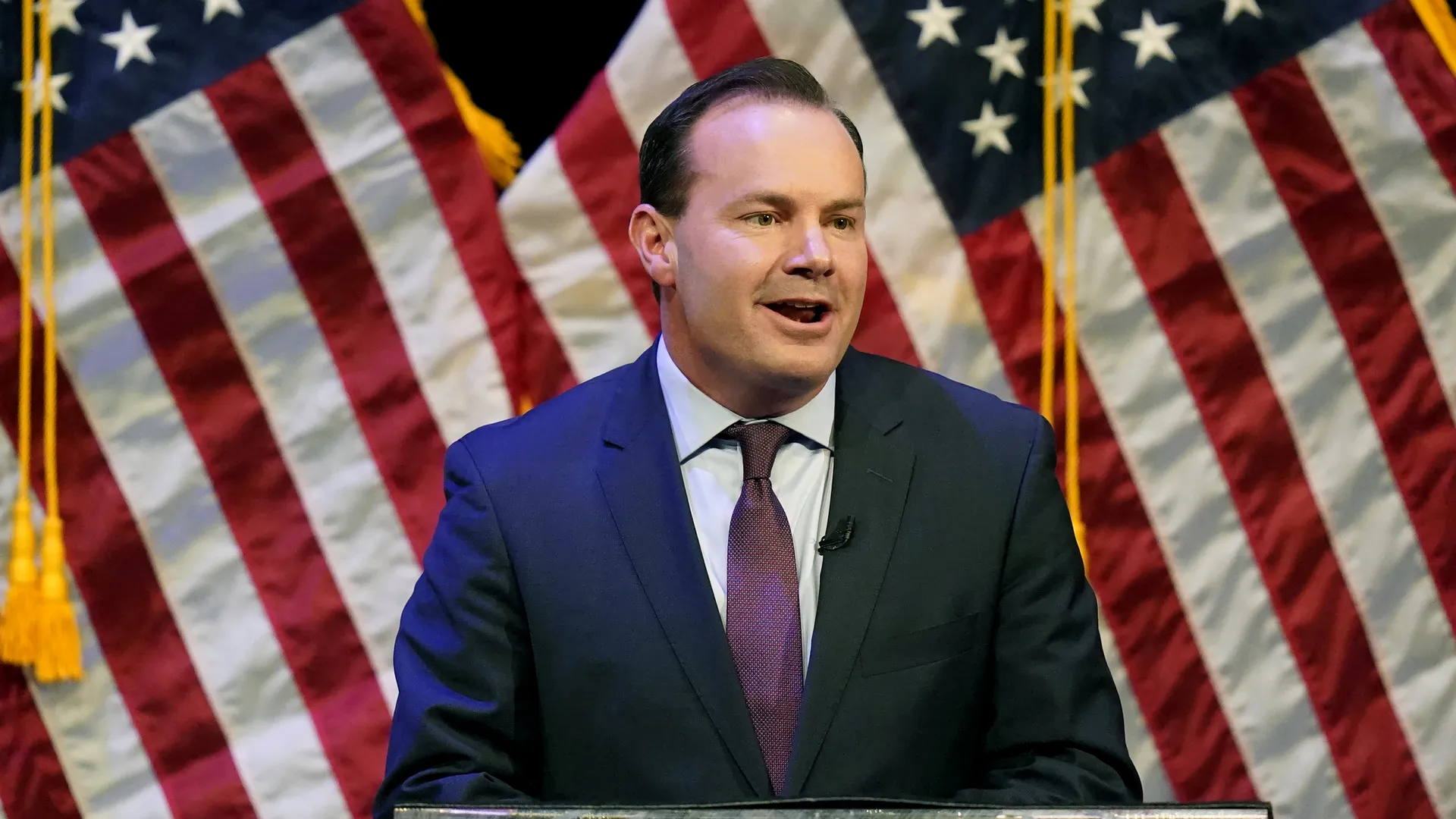


For more than 15 years, Senator Mike Lee has been a prominent voice in American conservative politics, building his public career around constitutional interpretation, limited federal government, individual liberty, and congressional authority.
From his early experiences watching arguments before the United States Supreme Court to his election to the U.S. Senate, Lee’s journey has been closely connected to American law and the country’s political institutions.
Today, the Republican senator from Utah occupies an influential position in Washington, particularly on questions involving energy policy, federal lands, government spending, and constitutional limits.
But who is Mike Lee, how did he enter politics, and why do his policy positions continue to generate debate across the United States?
Early Life: Growing Up Surrounded by American Law
Michael Shumway Lee was born on June 4, 1971, in Mesa, Arizona. His upbringing exposed him to the American legal system at an unusually early age.
His father, Rex E. Lee, was a prominent attorney who served as Solicitor General of the United States under President Ronald Reagan.
In that position, Rex Lee represented the federal government before the Supreme Court, placing the family close to some of the country’s most important constitutional debates.
Young Mike Lee attended many of his father’s Supreme Court arguments, experiences that helped shape his interest in constitutional law and the relationship between citizens and government.
Rather than entering politics immediately, Lee pursued a legal education.
He attended Brigham Young University, earning his undergraduate degree in political science in 1994. During his senior year, he served as student body president.
He continued at Brigham Young University’s law school, graduating in 1997.
These academic and family experiences established the foundation for his subsequent legal and political career.
Mike Lee US Senator for Utah+1
From Attorney to the United States Senate
Before becoming a senator, Mike Lee developed experience in several parts of the American legal system.
He worked as a judicial law clerk for federal judges, including Samuel Alito, first when Alito served on the U.S. Court of Appeals for the Third Circuit and later after Alito joined the Supreme Court.
Lee also practiced law at private firms, worked as an Assistant United States Attorney in Salt Lake City, and served as general counsel to Utah Governor Jon Huntsman Jr.
These positions exposed him to litigation, federal law, state government, and the practical challenges of interpreting legal authority.
In 2010, Lee entered a competitive U.S. Senate race in Utah and won the general election as a Republican.
He took office on January 3, 2011, beginning a congressional career that would continue through multiple elections.
Utah voters reelected him in 2016 and again in 2022. His current Senate term is scheduled to conclude in January 2029.
Ballotpedia+1
A Political Philosophy Centered on Limited Government
One of the defining characteristics of Mike Lee’s political career has been his emphasis on the United States Constitution.
Lee argues that federal authority should remain within the boundaries established by the Constitution and that powers not delegated to Washington should generally remain with states or individuals.
His political agenda has included support for reducing federal spending, pursuing a balanced-budget amendment, reforming federal programs, limiting government regulation, and strengthening congressional accountability.
Supporters of this approach argue that a smaller federal government can protect individual liberty, reduce unnecessary spending, and allow states to respond to local needs.
Critics of limited-government proposals argue that reducing federal authority can also weaken nationwide protections, public services, or regulatory oversight, depending on the policy involved.
These disagreements reflect a broader debate in American politics over the appropriate balance between federal power, state authority, and individual rights.
Mike Lee US Senator for Utah
His Growing Influence on Energy and Natural Resources
In the 119th Congress, covering 2025 and 2026, Mike Lee serves as chairman of the Senate Committee on Energy and Natural Resources.
The committee has jurisdiction over major issues involving federal energy resources, public lands, mineral leasing, national parks, and water resources.
Its responsibilities are especially important to Utah and other Western states, where large areas of land are managed by the federal government.
Lee has advocated for greater domestic energy production, reduced regulatory burdens, and increased state and local involvement in land-management decisions.
Those priorities have placed him within ongoing national discussions about energy affordability, conservation, economic development, and environmental protection.
Supporters of expanding domestic energy production emphasize potential benefits for jobs, supply security, and economic growth.
Environmental organizations and conservation advocates often emphasize the potential effects of expanded resource extraction on ecosystems, public lands, and long-term climate objectives.
The decisions considered by the committee can affect communities, industries, and public resources far beyond Utah.
Mike Lee US Senator for Utah+1
His Role in Judiciary, Foreign Relations, and Budget Policy
Beyond energy, Lee participates in several other important Senate committees.
He chairs the Judiciary Subcommittee on Antitrust, Competition Policy, and Consumer Rights, which addresses issues related to market competition and the behavior of major companies.
His Judiciary Committee work also places him within debates about federal courts, legal rights, and the structure of the justice system.
As a member of the Senate Foreign Relations Committee, Lee participates in congressional consideration of international affairs and America’s relationships with other countries.
His membership on the Budget Committee connects him to debates over federal expenditures, deficits, and fiscal priorities.
Together, these assignments provide opportunities to influence legislation and congressional oversight across several policy areas.
Mike Lee US Senator for Utah
Family, Faith, and Personal Life
Outside his work in Washington, Mike Lee has longstanding connections to Utah and the Church of Jesus Christ of Latter-day Saints.
As a young adult, he completed a two-year church mission in the Texas Rio Grande Valley.
Lee married Sharon Burr in 1993, and the couple have three children.
His personal background, legal education, and Utah community ties have remained important elements of his public biography.
Throughout his political career, he has frequently connected his understanding of constitutional government to principles of personal responsibility, religious liberty, and local decision-making.
Mike Lee US Senator for Utah+2
Why Mike Lee Remains an Important Figure in American Politics
The American political system is shaped not only by presidents and national elections but also by senators who help determine which laws advance, how federal agencies are overseen, and which issues receive congressional attention.
Mike Lee’s career illustrates the role that constitutional arguments play in contemporary conservative policymaking.
His approach to federal spending, regulation, natural resources, and government authority has attracted support from voters who favor limited federal intervention.
At the same time, his positions invite scrutiny from those who believe a stronger federal role is necessary in areas such as environmental protection, public services, and economic oversight.
His chairmanship of the Energy and Natural Resources Committee also gives him a significant platform in debates over how the United States manages its land and energy resources.
Looking Ahead: The Next Chapter of His Senate Career
As of November 2026, Mike Lee remains a Republican U.S. senator representing Utah, with his current term running until January 2029.
The coming years will bring further congressional debates about energy, government spending, technology regulation, national security, and the division of authority between Washington and the states.
Lee’s participation in those discussions will continue to be shaped by the constitutional principles he has emphasized since entering the Senate.
Whether Americans agree or disagree with his policy positions, understanding his record offers insight into broader debates about the role of government in the United States.
Conclusion
Mike Lee’s journey from a young observer of Supreme Court proceedings to a United States senator reflects a career built around law, constitutional interpretation, and public service.
His experience as an attorney, federal prosecutor, government counsel, and senator has informed his approach to legislation and congressional oversight.
After more than a decade and a half in Washington, he remains involved in major policy debates that affect Utah and the nation.
His political career also highlights a question that has remained central to American government for generations: How much authority should the federal government exercise, and where should the limits of that power be drawn?