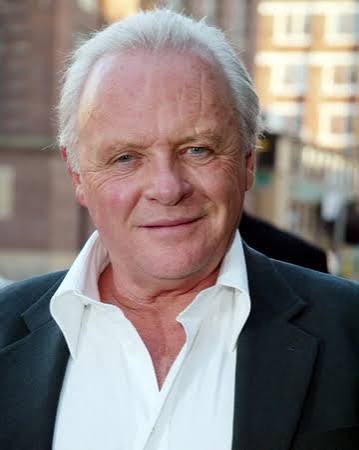
n this imagined scenario, the entertainment world awakens to heartbreaking fictional news: Sir Anthony Hopkins, one of the most celebrated actors of his generation, has died.
It is the kind of imaginary announcement that would seem almost impossible to absorb.
For decades, Hopkins has been more than a familiar face on a movie screen. His unmistakable voice, extraordinary control, and ability to communicate enormous emotion with the smallest expression have made him one of cinema’s most recognizable performers.
In this fictional tribute, news of his imagined passing spreads rapidly among movie lovers around the world. Audiences begin revisiting the performances that frightened them, moved them, surprised them, and stayed in their memories long after the credits disappeared from the screen.
Yet the story of Anthony Hopkins is much larger than any single character.
It is the story of a Welsh actor who built an extraordinary international career through discipline, reinvention, and a willingness to continue exploring his craft across generations.
From Wales to the World Stage
Anthony Hopkins was born in Margam, Wales, on December 31, 1937.
Few could have predicted just how far his journey would eventually take him.
As a young man, Hopkins developed an interest in acting and pursued formal dramatic training. His talent eventually brought him into Britain’s professional theater world, including work with the National Theatre.
Those early years helped establish the foundation of the acting style audiences would later recognize immediately.
Hopkins could be explosive when a role demanded it, but some of his most memorable performances relied on restraint.
A pause.
A glance.
A subtle movement of the face.
A sentence spoken quietly rather than shouted.
He learned how silence could sometimes communicate more than dialogue.
That ability eventually became one of the defining characteristics of his screen career.
The Character the World Could Never Forget
For many viewers, one Anthony Hopkins performance stands above all others in popular culture: Dr. Hannibal Lecter in The Silence of the Lambs.
The performance became legendary.
Hopkins did not need constant movement or elaborate theatrics to make Lecter frightening. His calmness was part of what made the character so unsettling.
The controlled voice, unwavering attention and unnerving intelligence created a villain audiences could not easily forget.
Hopkins won the Academy Award for Best Actor for the performance.
But reducing his career to Hannibal Lecter would overlook the remarkable range he demonstrated throughout decades of work.
Hopkins portrayed historical figures, fathers, intellectuals, troubled men, powerful leaders and deeply vulnerable characters.
He could move from menace to tenderness and from emotional distance to devastating vulnerability.
A Career Defined by Reinvention
One reason Hopkins remained relevant for so long was his ability to evolve.
Cinema changed.
Audiences changed.
New generations of actors arrived.
Yet Hopkins continued working.
Instead of becoming simply a reminder of an earlier Hollywood era, he kept finding new characters and new audiences.
That longevity is particularly remarkable in an industry that often moves quickly from one generation of stars to another.
Hopkins became one of those rare performers whose career could connect grandparents, parents and younger moviegoers.
Some knew him from his early dramatic work.
Others discovered him through The Silence of the Lambs.
A younger generation encountered him through films including the Thor franchise, in which he portrayed Odin.
And still others saw another side of his extraordinary ability in The Father.
The Powerful Vulnerability of The Father
Decades after becoming internationally famous, Hopkins delivered one of the most acclaimed performances of his later career in The Father.
The role demonstrated something important about his artistry.
Even after decades of success, he could still surprise audiences.
The performance required vulnerability, confusion, fear, tenderness and emotional complexity.
Rather than relying on the commanding presence associated with many of his earlier characters, Hopkins allowed audiences to see fragility.
The performance earned him another Academy Award for Best Actor.
It was an extraordinary late-career achievement and another reminder that great acting does not necessarily diminish with age.
Sometimes experience deepens it.
More Than Awards
Anthony Hopkins’ career can easily be described through awards and famous movies, but numbers and trophies only tell part of the story.
His deeper legacy lies in the memories audiences carry with them.
Movies become connected to periods of people’s lives.
Someone remembers watching a Hopkins film with a parent who is no longer here.
Someone else remembers seeing The Silence of the Lambs for the first time and realizing how terrifying a quiet performance could be.
Another viewer discovers The Father decades later and sees Hopkins completely differently.
That is how an actor’s work moves beyond entertainment.
It becomes part of personal memory.
An Imagined Wave of Tributes
In this fictional scenario, tributes begin appearing from across the entertainment world.
Actors remember watching Hopkins when they were young and studying how effortlessly he seemed to command a scene.
Directors recall his preparation and professionalism.
Fans share photographs, favorite scenes and memories of discovering his films.
Some tributes focus on Hannibal Lecter.
Others remember Odin.
Others return to the quieter performances that revealed the enormous emotional range beneath Hopkins’ commanding presence.
In this imagined moment, one idea appears repeatedly:
Anthony Hopkins was never simply one character.
He was an actor capable of disappearing into many different lives.
The Voice, the Eyes and the Silence
There are performers audiences recognize immediately from their appearance.
With Hopkins, recognition can happen before the camera even reveals his face.
His voice has become part of his identity.
Measured, distinctive and capable of moving between warmth and menace, it has helped give many of his performances their unforgettable quality.
But his eyes were equally important.
Hopkins could hold a camera’s attention without saying anything.
Sometimes the smallest shift in expression suggested an entire conversation taking place beneath the surface.
That is a difficult skill to quantify.
It cannot be summarized by awards.
It is simply something audiences feel.
Generations of Moviegoers
In this fictional tribute, perhaps the most striking reaction would be how many different generations could immediately identify a Hopkins performance that mattered to them.
His career crossed extraordinary stretches of cultural change.
He worked through eras when audiences discovered films primarily in theaters, then through television and home video, and eventually through streaming platforms.
Technology transformed the way movies were made and consumed.
Hopkins endured through all of it.
That longevity meant his work was continually rediscovered.
A movie made decades earlier could suddenly reach someone watching it for the first time.
A legendary performance could become new again.
Remembering the Human Being Behind the Legend
Celebrity often turns people into symbols.
Their most famous photograph becomes their identity.
Their biggest movie becomes their entire career.
But behind every celebrated performer is a human life containing years of work that audiences never see.
There are auditions, rehearsals, disappointments, uncertainty and endless repetition behind performances that eventually look effortless.
Hopkins’ extraordinary career serves as a reminder that longevity in the arts is rarely accidental.
It requires persistence.
It requires adaptation.
And perhaps most importantly, it requires curiosity — the willingness to continue searching for something new even after the world already considers you successful.
An Imaginary Goodbye
In this fictional scenario, theaters and homes around the world glow with familiar images.
People return to the movies.
They hear that unmistakable voice again.
They watch the expressions.
They remember the tension.
They remember the laughter.
They remember the sadness.
And for a few hours, Anthony Hopkins is exactly where audiences have known him for generations:
on the screen.
That is one of the unusual things about cinema.
Actors age.
Generations change.
Time moves forward.
But a performance remains.
Press play, and suddenly the years disappear.
The character walks into the room again.
The voice returns.
The expression is exactly as it was.
The moment lives again.
A Legacy That Would Outlive Any Headline
If the fictional day described in this tribute ever became reality, Anthony Hopkins’ legacy would not be defined by the headline announcing his death.
It would be defined by everything that came before it.
By decades of performances.
By characters audiences could not forget.
By younger actors inspired by his work.
By movie lovers returning to his films years after they were released.
And by the remarkable fact that after spending so much of his life portraying other people, Anthony Hopkins created something unmistakably his own: a screen presence recognized around the world.
Legends in cinema are not created simply because someone becomes famous.
They are created when the work survives the moment in which it was made.
Anthony Hopkins has already achieved that kind of legacy.
His performances belong not merely to one decade or one generation, but to the history of modern film itself.
And in this entirely fictional farewell, that would be the most meaningful way to remember him:
not by imagining the final moment of his life, but by remembering all the moments he gave audiences on screen.